

Why Clinic Photography and Branding Win Bookings for Your Aesthetics Business
You're a brilliant injector. Your results are genuinely excellent. Your aftercare is meticulous.
And your photos are blurry shots taken on your phone, under your kitchen's warm-white bulb, against a magnolia wall with a radiator in the background.
Here's the uncomfortable truth: a prospective patient cannot see how good you are. They can only see how you present yourself and your skills.
Before anyone sits in your chair, they've already judged you — on your grid, your profile photo, the lighting in your before-and-afters, whether your logo looks like you made it in Canva in ten minutes (because you probably did, and that's fine — but it shows). In a market where someone three miles away is offering the same toxin at the same dose, your brand and your imagery are the differentiator. They are doing the selling before you ever open your mouth.
This isn't about ego. It's about margin. Let's get into it.
Why does branding actually matter for an aesthetics clinic?
Because patients don't buy treatments — they buy trust, transformation and a feeling of being in safe, expert hands. And in the absence of clinical knowledge (your patient can't assess your injection technique), they use proxies to judge competence. Your visual presentation is the biggest proxy there is.
Think about how you choose a restaurant, a dentist, a hotel. You make a snap judgement on presentation, then look for evidence to confirm it. Your patients do exactly the same thing.
Polished branding signals "this person is established, professional and worth paying more for."
Scrappy branding signals "discount, risky, maybe just started in their spare room."
Neither signal might be true — but the signal is what sticks with them.
Here's the part that matters for your business: branding is what lets you escape price competition. If you look the same as everyone else, you compete on price, and price competition in aesthetics is a race to the bottom that ends in burnout and feast-or-famine cashflow. A strong, consistent brand is permission to charge premium prices. It reframes you from "someone who does Botox" to "the clinic worth travelling for."
What is the difference between a logo and a brand?
A common, expensive misunderstanding. Your logo is one small piece of your brand. Your brand is the entire feeling someone gets from every touchpoint with your business.
Your brand includes:
Your visual identity — logo, colour palette, fonts, the consistent look of your imagery
Your tone of voice — how you write captions, emails, consent explanations and replies to comments
Your patient experience — from the booking journey to the candle in the treatment room to the follow-up text
Your photography — clinic shots, treatment shots, your own headshots, before-and-afters
You don't need to spend thousands on a brand agency. You do need consistency. A patient should be able to look at your Instagram, your website and your clinic and feel they're all the same business, run by the same careful person. Inconsistency is what reads as amateur — not lack of budget.
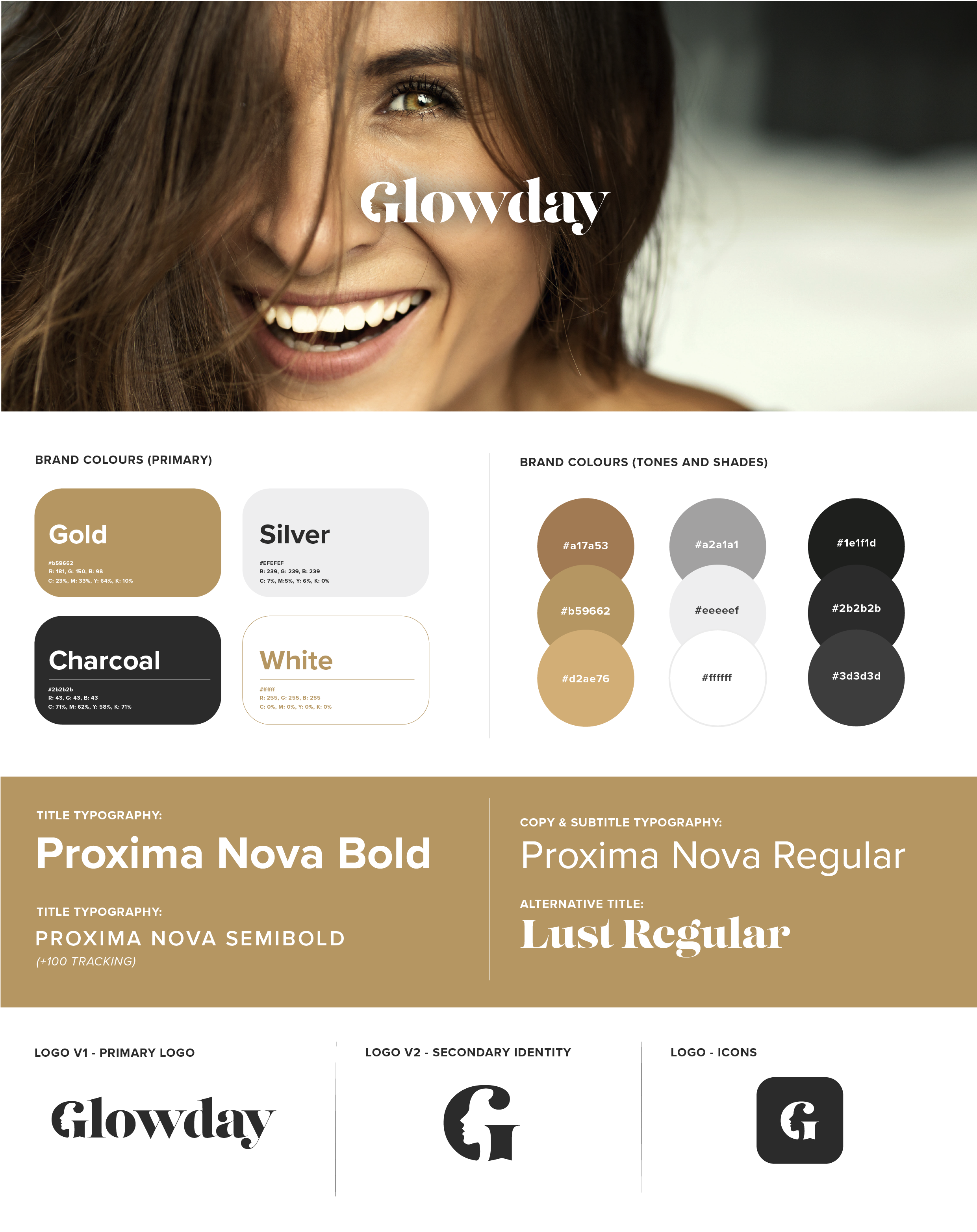
Brand guidelines help you stay on brand in all your content.
These are the rules for how your brand appears across all your channels. They determine
Why is photography the easiest and highest-leverage thing you can fix?
Because in aesthetics, your product is invisible until you photograph it. Your before-and-afters are your portfolio, your testimonials and your sales pitch all at once. And most practitioners are sabotaging their own results with bad photography.
Great results photographed badly look like mediocre results. Mediocre results photographed well look better than they are. That's not an endorsement of dishonesty — it's a reminder that your photography is doing more work than your clinical skill in the moment of acquisition, and you're probably under-investing in it.
There are two distinct jobs your photography needs to do:
Brand/marketing photography — professional shots of you, your clinic, your hands at work. This is what builds the premium perception and trust. Worth investing in a proper photographer once a year. It means you have a current bank of images and B-roll to re-purpose across all channels.
Clinical before-and-after photography — standardised, consistent, documented. This is both your best marketing asset and a medico-legal necessity.
How to take before-and-after photos that actually convert (and protect you)
Inconsistent before-and-afters are worse than none, because the difference your patient sees is often just the lighting and angle changing, not your work. Standardise ruthlessly:
Same everything. Same lighting, same distance, same angle, same background, same camera, same patient expression. Mark a spot on the floor for the patient to stand. Use a plain, mid-tone, non-distracting background — never a busy room.
No filters, no edits, ever. Beyond being misleading, the ASA and CAP rules are clear that misleading before-and-afters in cosmetic advertising are not permitted, and POMs (prescription-only medicines like botulinum toxin) cannot be advertised to the public at all. A filtered "after" is a complaint waiting to happen.
Neutralise the lighting. Warm domestic bulbs add a flattering glow that hides exactly the redness or texture you want to show changing. Use consistent, neutral, even lighting — a ring light or two soft side lights.
Capture multiple angles — front, both three-quarter, both profiles. You'll want them clinically and for content.
Get explicit, specific photographic consent — separate from treatment consent — covering clinical records and any marketing use, and make it easy for the patient to consent to one but not the other. (More on the data side below.)
Store them securely. Patient photos are special category personal data under UK GDPR. The camera roll on your personal phone is not an acceptable place to keep them.
That last point is where most practitioners are quietly non-compliant — and it matters.
The compliance bit: patient photos are sensitive data
Here's what every clinic owner needs to know. Clinical photographs of identifiable patients are personal data, and where they relate to health, they're special category data under UK GDPR — the highest-protection tier. The ICO expects you to have a lawful basis for processing, a clear retention policy, and appropriate security.
In practice, that means:
Don't store patient images on a personal phone, personal Google Drive, or unsecured laptop. If your phone is lost or your personal cloud is breached, you have a reportable data breach involving health data — that's an ICO matter, not just an awkward conversation.
Keep marketing consent and clinical consent separate and revocable. A patient consenting to treatment is not consenting to appear on your Instagram. If they later withdraw marketing consent, you need to be able to find and remove every instance — which is impossible if images are scattered across your camera roll and three apps.
Use a purpose-built, secure system for clinical records and images, rather than a patchwork of consumer apps that were never designed to hold health data.
Running your business well and running it ethically are the same thing here. Secure, properly consented photography protects your patients, protects you from an ICO headache, and — handily — also makes your images vastly easier to actually use in your marketing.
Five practical steps to upgrade your brand and photography this month
Book a half-day with a professional photographer. Get headshots, clinic shots, and "in action" shots (hands, products, the space). One session gives you months of content and instantly lifts the perception of your clinic.

Standardise your before-and-after setup. Fix the spot, the lighting and the background. Photograph everyone the same way, every time. Consistency alone will transform how impressive your results look.
Pick three brand colours and one or two fonts — set them up in Canva. Use them on everything. Consistency reads as established and trustworthy; it's the cheapest premium-perception upgrade you can make.
Audit your current grid. Delete or archive the blurry, badly-lit, off-brand posts. A smaller, consistent, high-quality grid converts better than a large messy one.
Move your patient images into secure, password protected storage. Get the data and consent piece right so you can market confidently and stay on the right side of the ICO.
FAQs
Do I need to spend a lot of money on branding to compete? No. You need consistency, not a big budget. A clean, consistent colour palette, a decent logo, good photography and a coherent tone of voice will outperform an expensive but inconsistent brand. Spend where it has leverage: photography first.
Can I use patient before-and-after photos in my marketing? Only with explicit, specific marketing consent (separate from treatment consent), and only where it complies with ASA/CAP rules. Crucially, you cannot advertise prescription-only medicines like botulinum toxin to the public — so be careful framing toxin results. Profhilo, skin treatments and dermal procedures have more latitude, but the imagery must never be misleading or filtered.
How often should I get professional photos taken? For most clinics, one to two professional sessions a year is enough to keep your brand library fresh, supplemented by consistent, well-shot before-and-afters from everyday treatments.
Is it really worth a professional photographer over my phone? For your brand and clinic imagery, yes — it's one of the highest-return investments you can make, because it directly shapes whether you're perceived as premium or budget. For day-to-day before-and-afters, a good consistent phone setup is fine, as long as the lighting and standardisation are right.
Where should I store patient photographs? In a secure, purpose-built clinical system with proper access controls and consent tracking — not on a personal phone or consumer cloud account. Patient images are special category data under UK GDPR.
Your brand is doing the selling — make it count
You've invested years in your clinical skill. Don't let blurry photos and an inconsistent brand undersell it — and don't let scattered patient images expose you to a data breach.
GlowdayPRO gives you a bookable, professional clinic profile that presents your work at its best, marketplace exposure to patients actively searching, and secure, purpose-built patient records with proper consent tracking — so your photography works for your marketing while staying firmly on the right side of the ICO.
Try it free for 30 days at pro.glowday.com and see how your clinic looks when it's presented the way your results deserve.