

You're still taking bookings in your DMs at 10pm. Still printing consent forms. Still typing out reminders one patient at a time. And you keep telling yourself you'll sort proper software out "when you're a bit bigger."
Here's the thing. The manual way isn't saving you money. It's quietly costing you, in no-shows you can't charge, patients who drift off, and hours of admin you should be spending on growing your business.
Nearly every reason practitioners give for not going digital falls apart when you look at it properly.
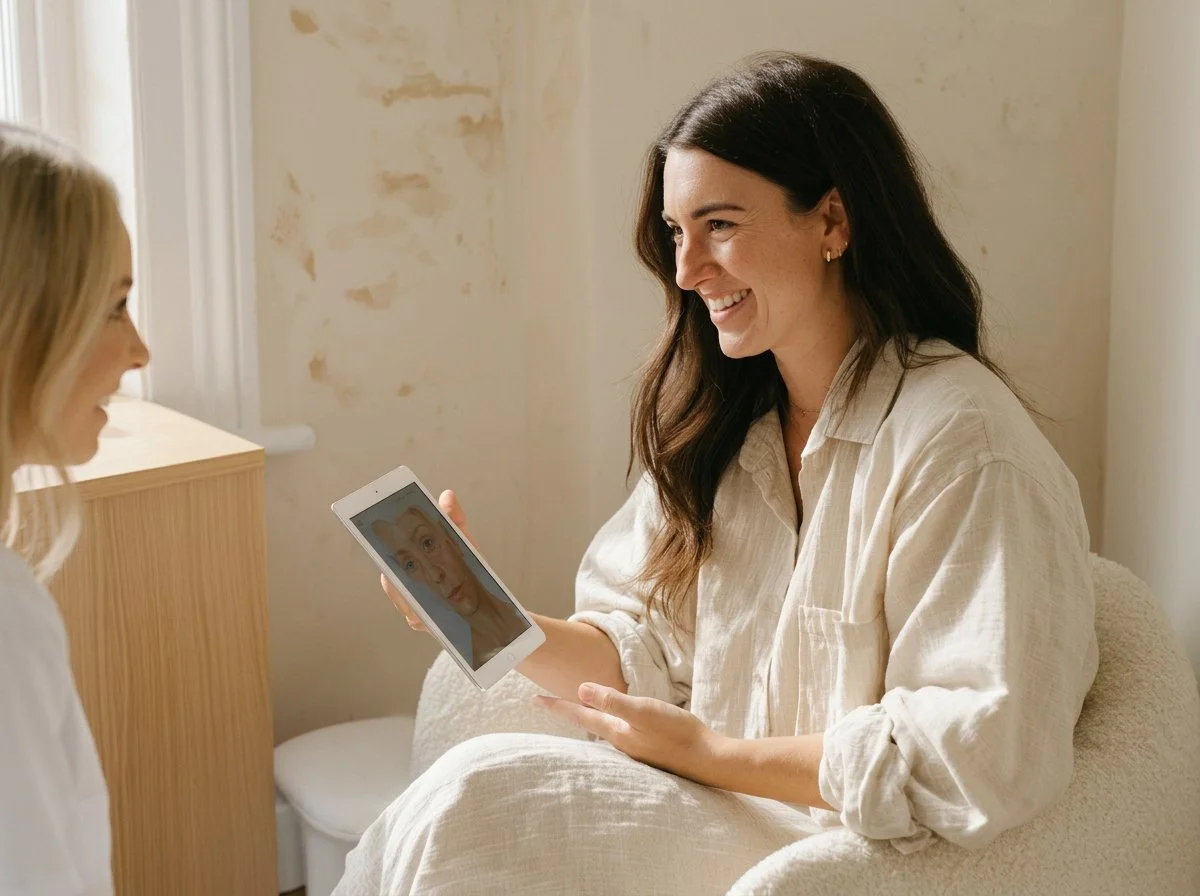
Why do practitioners resist going digital?
Because most of us didn't come from business. We came from the public sector. In the NHS, the systems were handed to you. Bookings, records, reminders, all of it ran in the background while you got on with treating people. You didn’t need to choose or pay for software. You didn’t need to market to patients. You didn’t need to order stock.
Now it's all on you.
Choosing systems, paying for them, running them. That's a real shift, and it's uncomfortable. So it's tempting to put it off and stick with the diary and the DMs that feel familiar.
But familiar isn't the same as working. Here's what's actually happening when you delay.
The 10 objections, and why none of them hold up
1. "It's another monthly cost I can't justify yet." You're not adding a cost, you're stopping a leak. One no-show you can now charge for, or one patient rebooked who'd otherwise have wandered off, covers the subscription for the month. Staying lean is smart. Avoiding setting up systems is not.
2. "I've only got a handful of patients. It's overkill." The sooner you complete treatment records within Glowday, the sooner you start to collect reviews and before and after photos. These are the marketing assets you need to attract new patients. Plus, the habits you build for the first 10 patients are the ones you'll have at 100. Set it up now and growth is smooth. Bolt it on later, in a panic, and you're migrating a mess while trying to treat people and grow your business.
3. "My diary and my DMs work fine." …until you double-book two patients. Or a message gets buried. Or you have a complication and your only record is a conversation buried in your DMs. A scattered system feels fine when it's quiet and falls apart when you need it not to.
4. "I can stitch together free tools." Google Calendar, WhatsApp, a form and PayPal isn't free. You pay in the time you spend duct-taping it together, the gaps in your audit trail, and patient data scattered across consumer apps never built to hold health information. Plus is makes you look unprofessional - which is a trust killer.
5. "Storing patient data online feels risky." The risky version is the one you're probably doing now. Paper forms in a drawer and sensitive patient info sitting in your personal WhatsApp and camera roll. Purpose-built software, where patient data is password protected, encrypted and anonymised is more secure than that, not less. You really shouldn’t have any patient data on your personal phone,
6. "I’m only treating family and friends" That’s great! The perfect people to write you amazing reviews and allow you to share their before and afters. Get them booking through your Glowday link, discount the treatment if you wish, as long as they’ve completed the forms within the platform, they will be invited to leave you a review.
7. "I don't have good enough photos for a profile." Professional photos are one of the best investments you can make for your business early on. A few headshots and some clinic shots aren’t prohibitively expensive, but they help professionalise you and your business immediately. Even without professional photos, if you have a good phone camera and a willing helper - you can create some good shots! Here’s a guide on getting some great shots.
8. "Booking by DM is personal. It's part of my brand." Nobody chose their practitioner because they were good at managing a calendar. Take the booking admin off your plate, sooner rather than later, and you get more time for the bit that actually builds trust, the consultation, the treatment and the aftercare.
9. "I’m still full time in the NHS, so I don’t have regular hours." You are completely in control of your availability. Only open up appointments when you have them. The sooner you start embedding systems into your business, the sooner it will grow.
10. "I’m only dipping my toe into aesthetics." Starting an aesthetics business is a beautifully low-risk opportunity for healthcare entrepreneurs. But this safety net brings other challenges - it's a gilded cage, of sorts. Moving between the two worlds of private practice and the public sector requires a constant flux in mindset and demands. You have to make the decision to focus on your business in order for it to be successful. If you don’t, it will fail.
So how much is "doing it manually" actually costing you?
Let's put real numbers on it, because this is where the penny drops.
A loyal patient having regular treatments is worth in the region of £1,400 to £1,500 a year to your business, and more over time as they age and trust you with more. Get to just 50 patients like that and you're looking at over £70,000 a year in revenue.
Now think about what leaks that away:
A no-show on a £250 treatment slot you couldn't fill, and couldn't charge for.
A patient who loved their result but never rebooked, because nothing reminded them.
The hours every week on admin that you could have spent marketing to fill your diary.
The subscription is a rounding error next to any one of those. This is the maths that turns "it's another cost" into "I can't afford not to."
Is online booking actually secure and GDPR compliant?
As a practitioner, you are the data controller for your patients' data. That makes you legally responsible for how it's captured, stored and protected. Two things you need in place:
ICO registration. If you're processing patient data, you need to be registered with the Information Commissioner's Office. This is a basic, non-negotiable step. It costs £52 for solo clinicians.
Software genuinely built for health data. Not a repurposed salon tool with a compliance badge slapped on it.
Here's the checklist to hold any software to:
Data encrypted in transit (moving between devices and servers).
Data encrypted and anonymised at rest (while it's stored).
Data stored in EU-based cloud storage.
Password protected, and the screen locks when you hand your device to a patient to sign, so they never see anyone else's records.
If a platform can't tell you it does all of that, in writing, keep looking.
FAQs
Do I need practice management software if I'm just starting out? Yes, arguably more than an established clinic does. Good records and consent from patient one protect you medico-legally and set the habits you'll rely on as you grow. Backfilling notes later doesn't stand up to scrutiny.
Will online booking mean I lose control of my diary? No. You set your availability, your treatment types and your rules. Online booking runs alongside manual booking, so you can still add patients in yourself whenever you want.
Is it worth it if most of my patients book by DM anyway? The point isn't to stop the personal contact. It's to stop the admin. Online booking, digital consent, card capture and automated reminders take the repetitive work off you and free up your time for the patients themselves.
How does software help me reduce no-shows? By capturing card details at the point of booking, so you can charge a fair no-show or late-cancel fee, and by sending automated reminders that cut down on people forgetting in the first place.
Isn't my data safer on paper? No. Paper forms and patient photos in your personal phone are a bigger risk than purpose-built, encrypted software. Proper software is designed specifically to keep sensitive health data secure.
Read more
Patients don't just arrive, they're acquired →pro.glowday.com/blog/patients-are-acquired
What every clinic owner needs to know about GDPR and the ICO → pro.glowday.com/blog/gdpr-ico-aesthetics
How much does it cost to run an aesthetics clinic? → pro.glowday.com/blog/cost-to-run-a-clinic
Ready to start doing it the right way?
Glowday is free for 6 months for new practitioners*.
One place for your bookings, patient records, consent forms, payments and reminders, built for medical aesthetics and secure by design. No more 10pm booking DMs. No more no-shows you can't charge. No more patient data scattered across apps that were never meant to hold it.
Try GlowdayPRO free for 6 months at pro.glowday.com.
Han x
*Practitioners who are in their first year of practice.